 RU

tutorial in quadrobics.
Part 1.
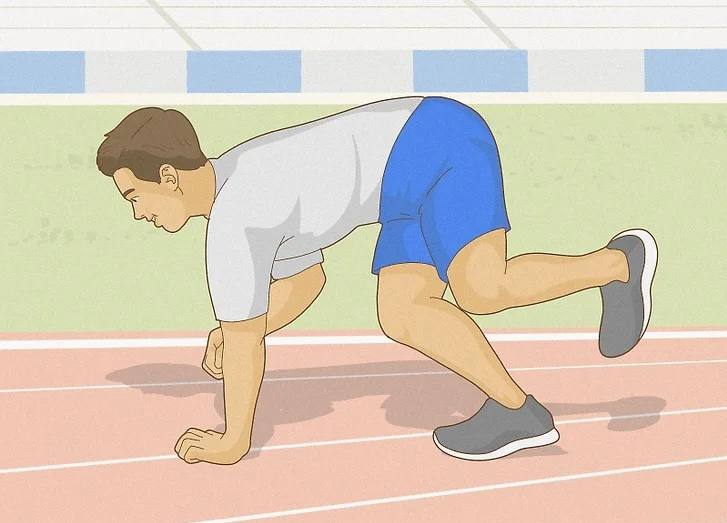
Quadrobics has burst into the world as the latest fitness trend, and in a way it really is! Mostly, however, this activity is practiced by therians – people who identify with animals – although recently quadrobics has become popular among ordinary fitness enthusiasts. Basically, it's just a way to move around on all fours, imitating an animal. We’ll tell you more about the sport, its history, safety and how to practice it, from the basic stand to running and jumping on all fours.
What are quadrobics?
Quadrobics is a sport in which people move, run and jump on all fours. It is popular with therians, or people who identify with various animals, as well as some fitness enthusiasts. However, this is not a very well-studied form of exercise at the moment.
Introduction.
Quadrobics is the practice of walking on all fours, like four-legged animals such as cats. This is mainly done by therians as a way of feeling connected to the animal they identify with. Quadrobics includes all kinds of four-legged movement, from walking to running and jumping.
Quadrobics can also be used in rehabilitation and medicine as a form of physical therapy, but this practice is extremely rare and unexplored.
A history of quadrobics.
Part 2.
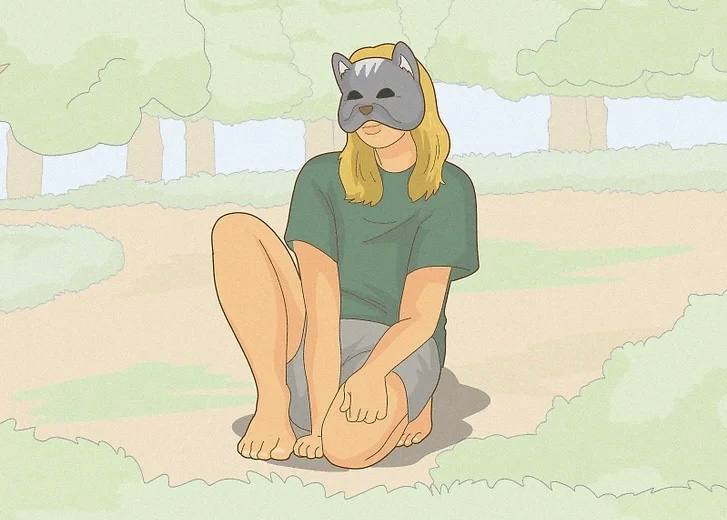
The quadrobics is closely related to the Terian subculture.
Moving on all fours as an exercise has been around for a long time. In fact, the longest four-way in history belongs to a Canadian who walked 35 miles (56 km) in this way in 2001. Quadrobics as a sport, however, gained popularity alongside Therians in the 2000s, when there was an explosive growth thanks to the Internet.
Recently, different forms of quadrobics have begun to gradually gain popularity in various fitness communities, and people say they are great for cortical muscles and increased agility.
Currently, quadrobics is not an official sport, but you can find groups of other people with whom to practice quadrobics.
Part 3.
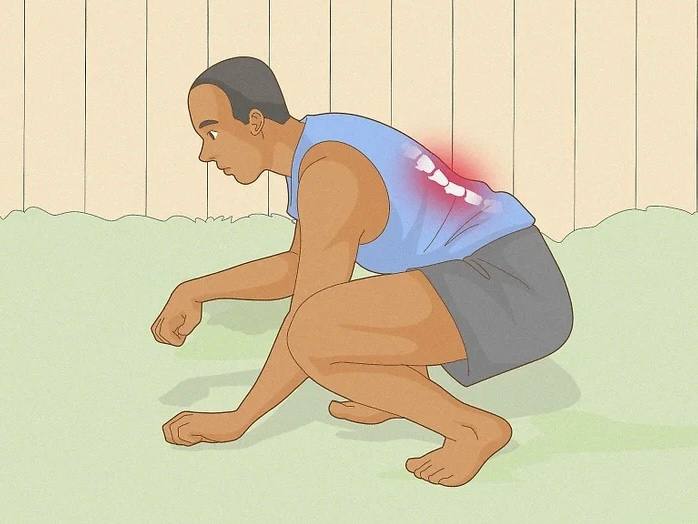
Quadrobics can be a good set of exercises, but it can also lead to poor posture or injury with improper performance techniques.
For people, good posture includes a straight spine with flat shoulders, neck, hips and legs. Quadrobics involves movement on all fours, which is not a typical body position and can lead to bad habits or injuries if you are not careful.
However, there’s no doubt that exercise like the one in quadrobics can be a great workout if you do it safely and practice it regularly for at least about an hour each week.
Keep in mind that quadrobics as a sport and activity is not well studied.There may be consequences that health care providers are unaware of, so be careful!
Part 4.
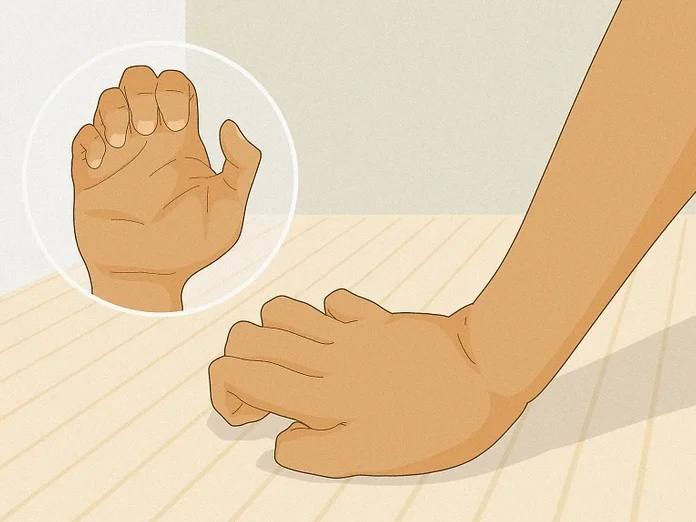
Bend your fingers and transfer the weight to your palm.
Many quadrobics practitioners prefer to use a paw-like hand shape, which they find most comfortable and natural. Bend your fingers to the palm so that the last two joints of each finger are bent, but the hands should not be tightly compressed into fists, and the palms should be flat. During movement, transfer the weight mainly in the palm of your hand.
Also, keep your thumbs straight and on the sides of your palms to avoid injury.
Some therian and quadrobics athletes also move around with their palms flat and open, or use gloves to protect their hands.
Part 5. The quadrobics stand.
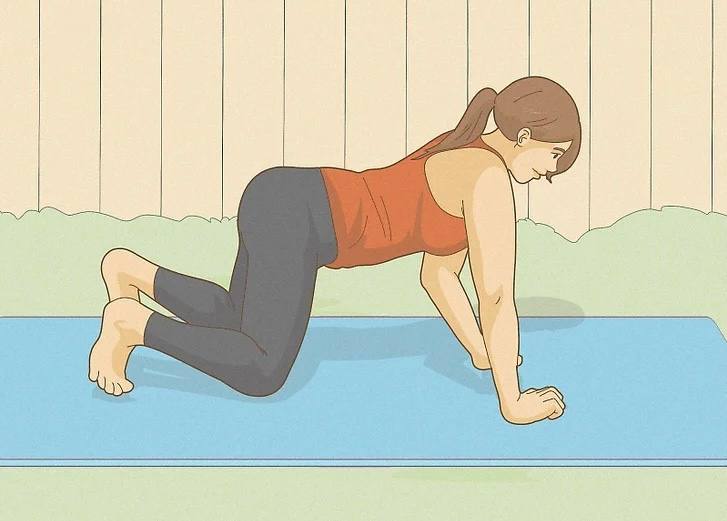
Stand on your hands and knees on a soft surface.
To begin with, it's important to learn how to stand comfortably still before you start walking or running. Find a soft surface, such as a carpet, grass, or yoga mat. Then kneel down, with your feet stuck right behind your knees.
Straighten your back, shoulders up but loose and the press is tense.
Part 5.1 Get up on your feet.
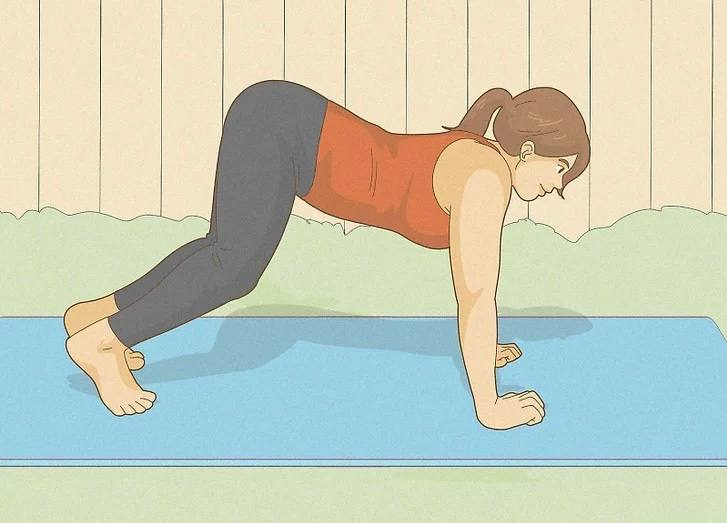
Lift your knees off the ground, supporting yourself with your feet, and continue to raise your knees until you are comfortable holding your raised position for a long time – 1-2 minutes at a time.
You may need to practice a little just standing in that position to work out the power of your abs, arms and legs for other movements.
You should have a small angle between your shins and the ground, but it also requires a lot of force.
Expand your strut and put your legs further apart for more stability, and you can straighten your knees a little bit to feel more stable.
Part 6: Walking and Stepping in the Quadrantobics.
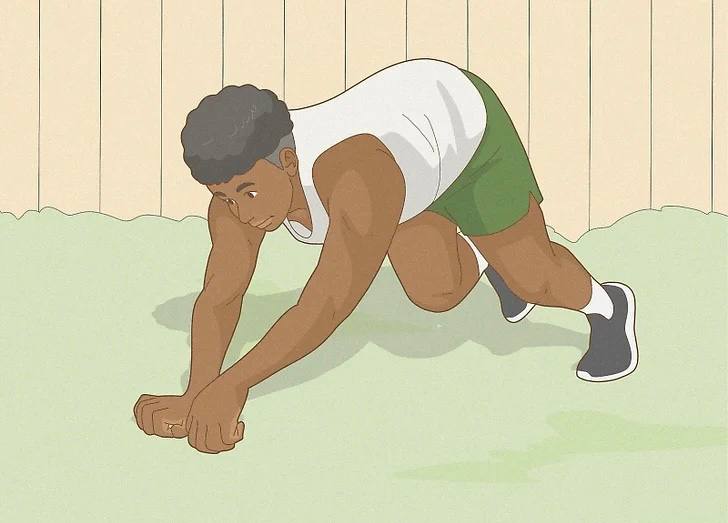
Start moving as usual by transferring weight from foot to foot and use your hands to support your body.
Going to quadrobics is easy. Place one foot in front of the other as you would walk standing, except to stay on all fours. As your legs move, synchronously move your arms forward to help your torso move along with your back. Don’t be afraid to keep the back up high at the start of training – you can lower it later when you feel comfortable moving in this way.
While walking, don’t worry too much about the rhythm or patterns of movement of your arms and legs.
Keep your back straight, abs tucked and your neck mostly straight, bending it only to look forward and see where you're going.
Part 7, trot to quadrobics.
Exercise lifting the opposite arm and leg at the same time.
In quadrobics, a trot is an elastic, faster-than-step movement. The trot has its own pattern of movement. First, get on all fours. Raise your left hand and right leg at the same time, then lower them and raise your right arm and left leg at the same time.
Continue to alternate arms and legs more quickly, staying still. As you do, try to add a more springy transition between your movements so that you have a confident trot in place.
Part 7.1 trot in quadrobics.
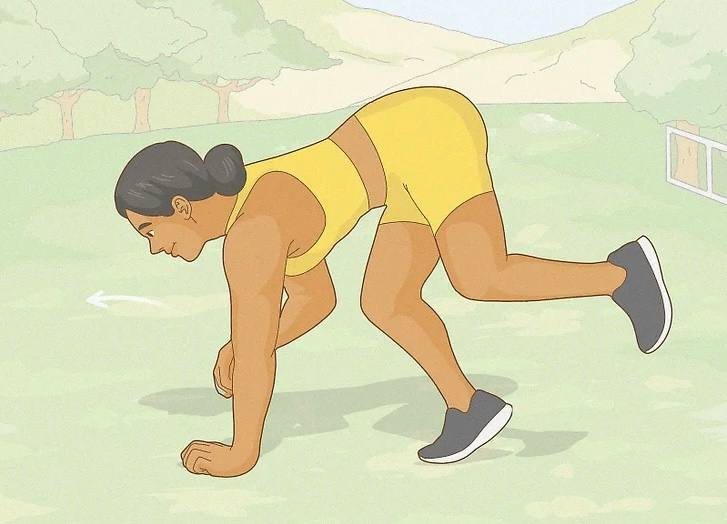
Move forward as soon as you have mastered the movement pattern.
Once you can comfortably trot in place for 10-20 seconds at a time, start moving forward.
In the meantime, your hands hold you in a stable position and guide your movement.
Start slowly and gradually try to move faster and faster. Remember, however, that trot is a more energy-intensive gait than a step and pause for rest.
Part 8, gallop in quadrobics.
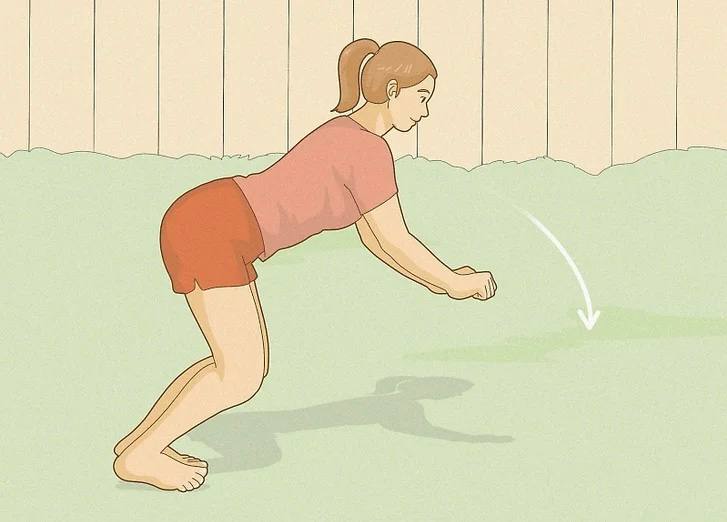
Practice pushing your feet and leaning on the surface in front of your hands.
The light gallop is between step and run, and a little more intense than trotting. First stand on all fours, then raise both hands off the ground, lift your body and step forward with your feet, and then land on your palm.
At this stage, your feet don't leave the ground - they're there to hold you back and give you movement forward.
For starters, do not raise your hands more than 10cm from the ground, which will help prevent injury while you strengthen the strength of your wrists.
Part 8.1 Gallops in quadrobics.
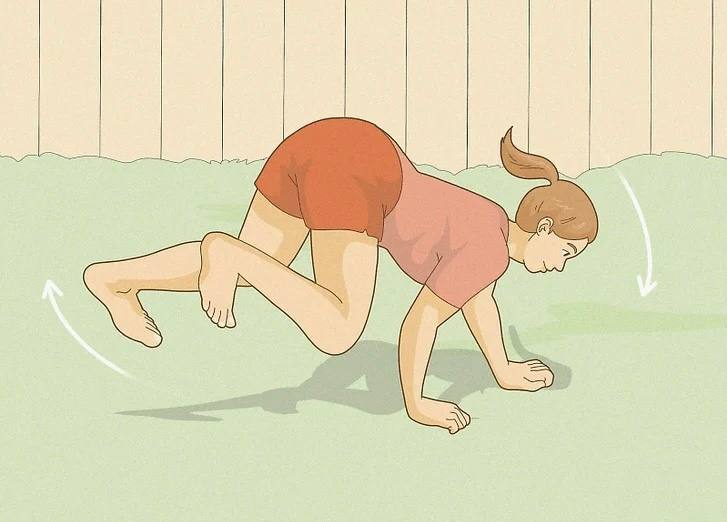
When landing, push your feet off the ground, then repeat.
Once you've landed on your palm, push your feet back to lift the body again. Try to land with your feet closer to your arms, but not close enough to lose your balance. Congratulations - you just galloped.
Repeat this gait until you feel that it has become natural. Push forward, land on your palm and make a small jump with your feet again.
Sometimes it's more convenient if the legs and arms are a little out of sync - land on one hand, then on the other, then push back with one foot, and then the other.
Continue to tie the whole process together until it is smooth and you can perform it without thinking.
Part 9. Run (Career) in quadrobics.
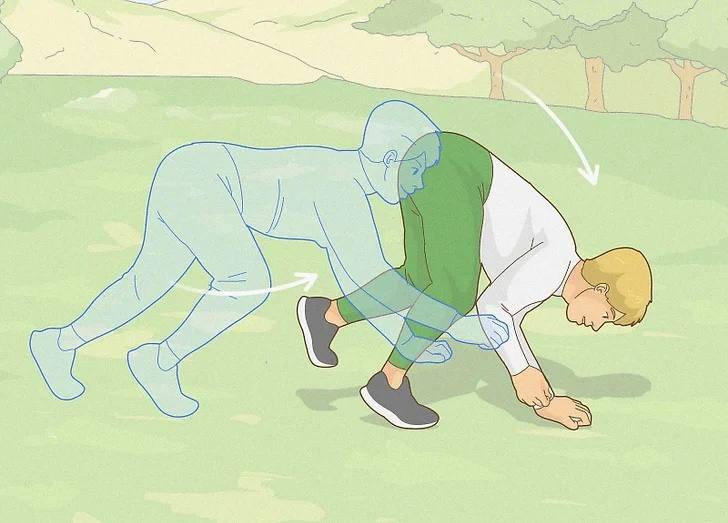
Extend and speed up the gallop to start running even faster.
In quadrobics, running or sprinting is simply a longer and faster gallop. As you gallop and raise your hands off the ground, try to get them to land further forward than with a normal gallop and follow your feet. Again, it may be more convenient if one hand lands a little earlier than the other.
While running, focus on straightening your torso and opening up as you lean forward.
Continue to practice! quadrobics is a completely new system of movement for humans, so don’t be discouraged if you run slowly at first.
Part 10, jumping into the quadrobics.
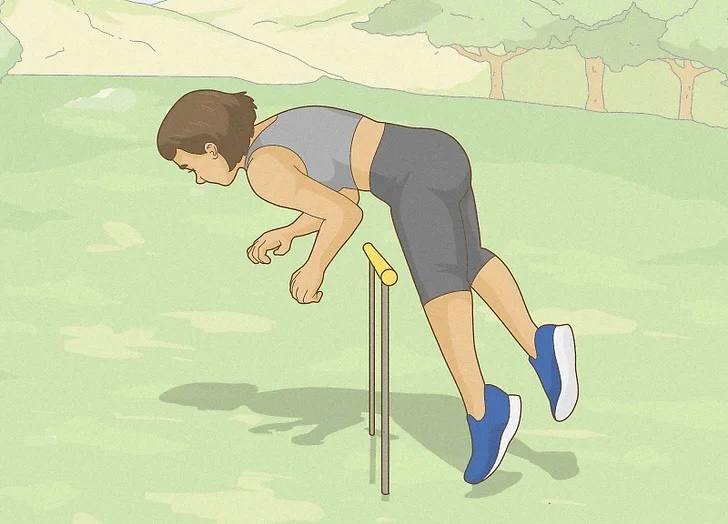
Raise your hands to the body and push back stronger during a gallop to jump.
Jumping in quadrobics is essentially a modified gallop. To perform the jump, start moving in a gallop. Then, raising your arms, bend your elbows and bring your hands to your chest. Repelling the legs, direct the torso in a more vertical position than usual.
Pull your feet off the ground and land on your palm.
Practice jumping through low obstacles, such as shoes, first. When you're comfortable, try jumping on the couch or through boxes.
Part 11: Safety and Injury Prevention.
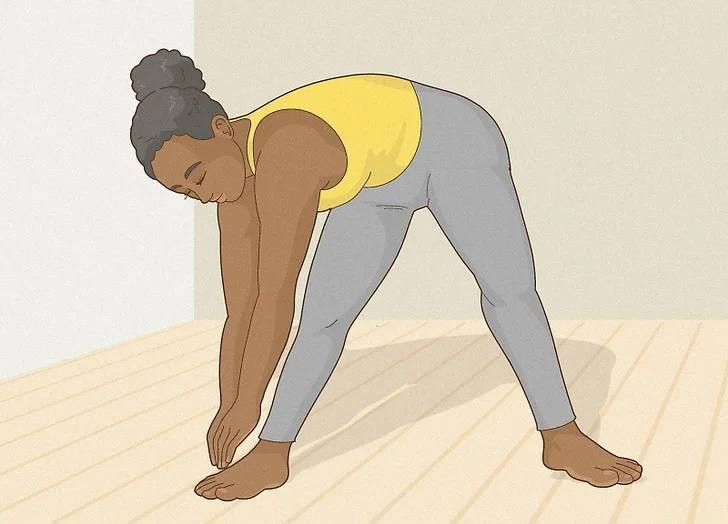
Before quadrobics, always do a full-body warm-up.
Quadrobics involves almost all parts of the body, and movements are usually quite unusual for muscles, so it is important to stretch as before any other workout.
Pay special attention to stretching the arms, legs and muscles of the cortex.
Bend over and touch your toes for 10 seconds, keeping your feet straight to stretch your legs.
Relax your arms and for 10 seconds and wave them around your torso like a windmill to stretch your arms.
Turn the torso from side to side for 10 seconds to stretch the muscles of the trunk.
Stretching for 3-5 minutes before each quadrobics practice.
Part 11.1 Safety and Injury Prevention.
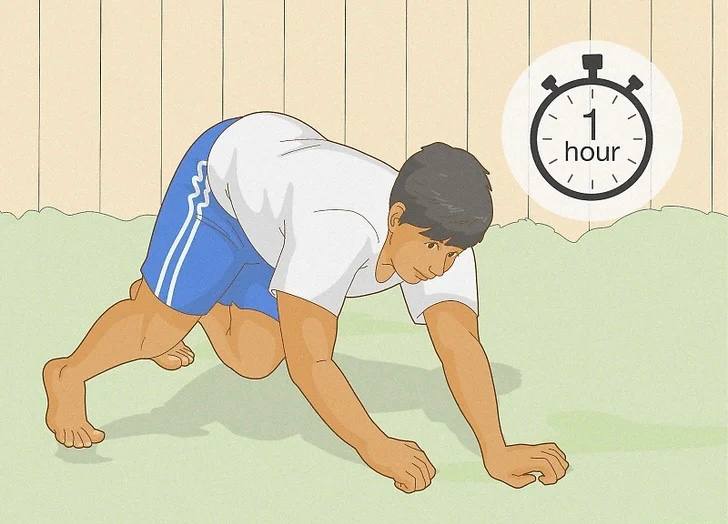
Do quadrobics for at least an hour a week.
The human body is less designed to walk on all fours than in animals, even if you identify with a four-legged animal. To ensure safety and avoid injury, exercise regularly, quadrobics should be at least one hour a week, the maximum time of classes should also not be too long, always listen to your body. Otherwise, you may develop poor posture, other injuries or complications, muscles and bones of the skeleton.
Part 11.2 Safety and Injury Prevention.
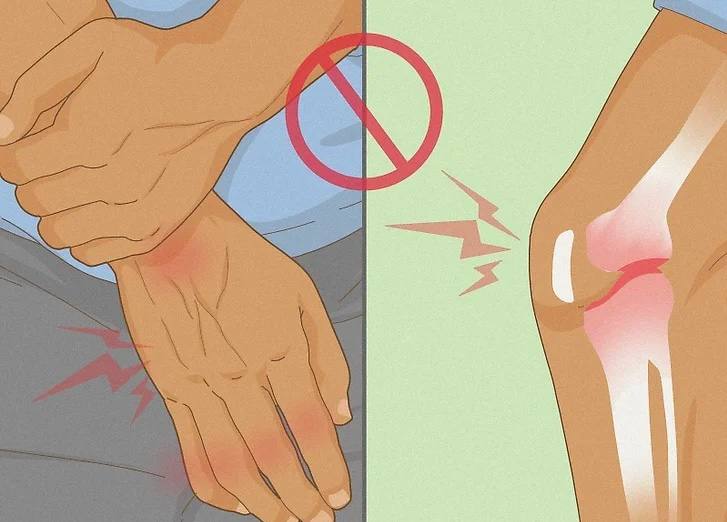
Avoid quadrobics if you have injuries.
Again, quadrobics is a great workout, but it’s an unusual way for your body to move. If you already have injuries or other medical conditions, such as arthritis or past injuries, it’s best to refrain from quadrobics and focus on more vertical and natural exercises that are easier for your body.
Before you start quadrobics, it is advisable to consult a doctor, even if you do not have injuries or other diseases.